GRAINEL PRODUCTION

THERMAL MODIFICATION

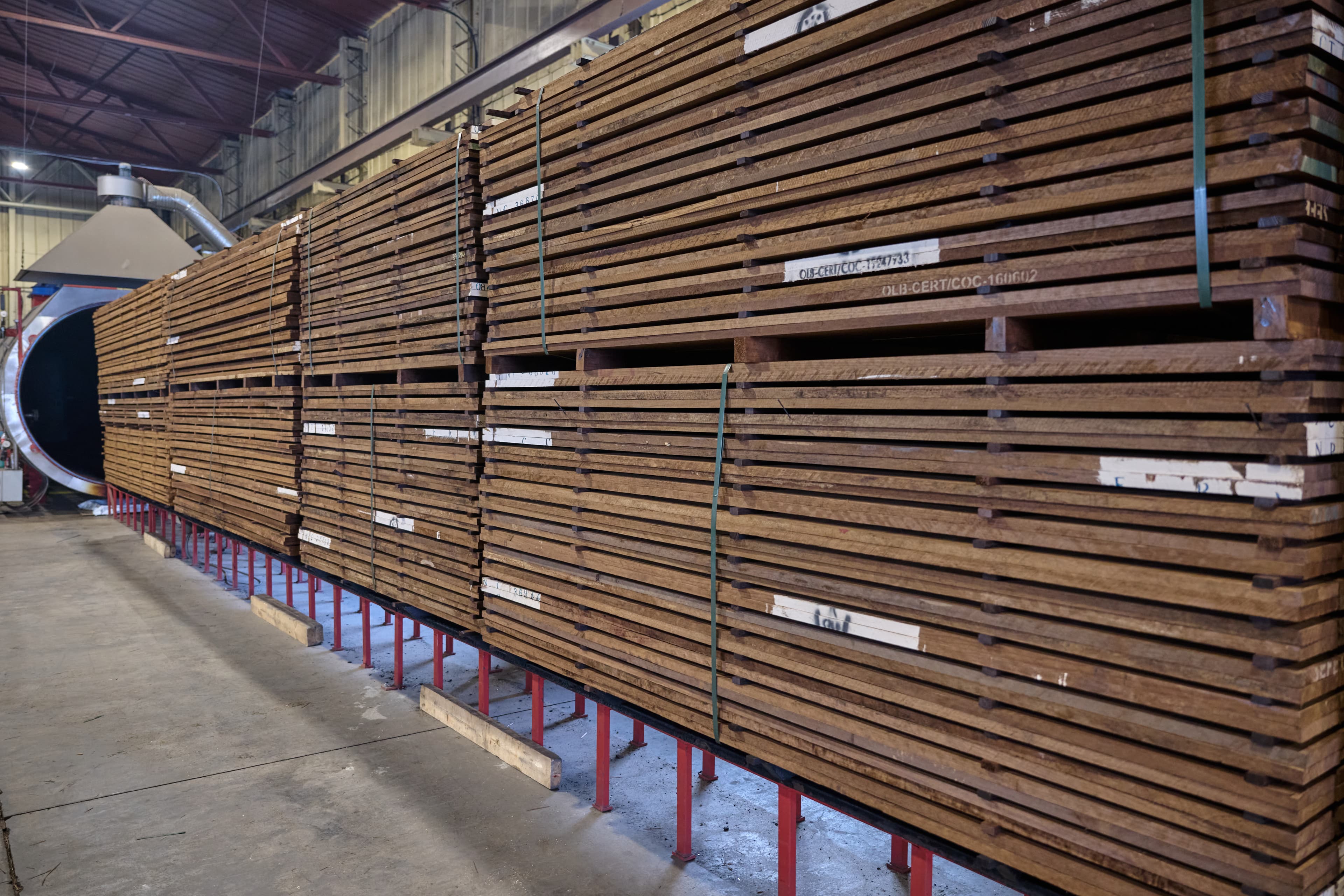
Thermally modified wood is a mechanically and chemically altered wood material whose properties are improved at high temperatures of approximately 160-220 C in an oxygen-poor environment without chemical additives. The treatment is carried out as a controlled process in which the wood is heated and cooled in stages.

During thermal modification, hygroscopic components in the wood break down, which reduces equilibrium moisture content and moisture absorption and significantly improves dimensional stability. The wood also becomes less prone to swelling and shrinkage under changes in the indoor climate.

The process makes the wood tone more even and darker while emphasizing the structure of the annual rings. Thermally modified wood is biologically more durable than untreated wood, yet it retains its natural origin and remains fully recyclable.

Our panels are thermally modified at different temperatures. Our main regime is 180-220 degrees. At the lower range of 160-180 degrees, the wood tone remains lighter than usual and is marked with the letter S as the last character in the reference code. At higher temperatures we achieve a darker than usual tone, marked with DD in the reference code.
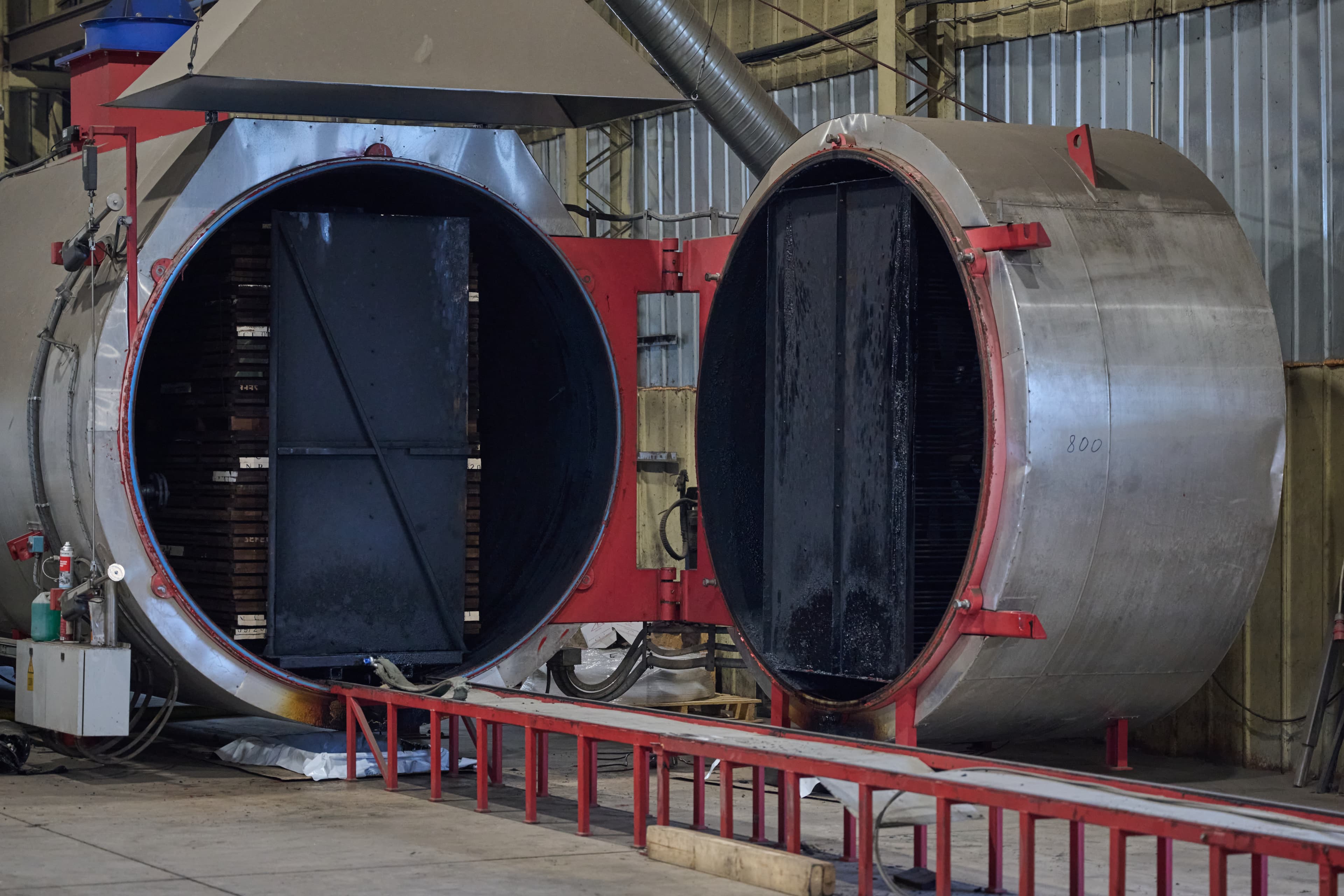
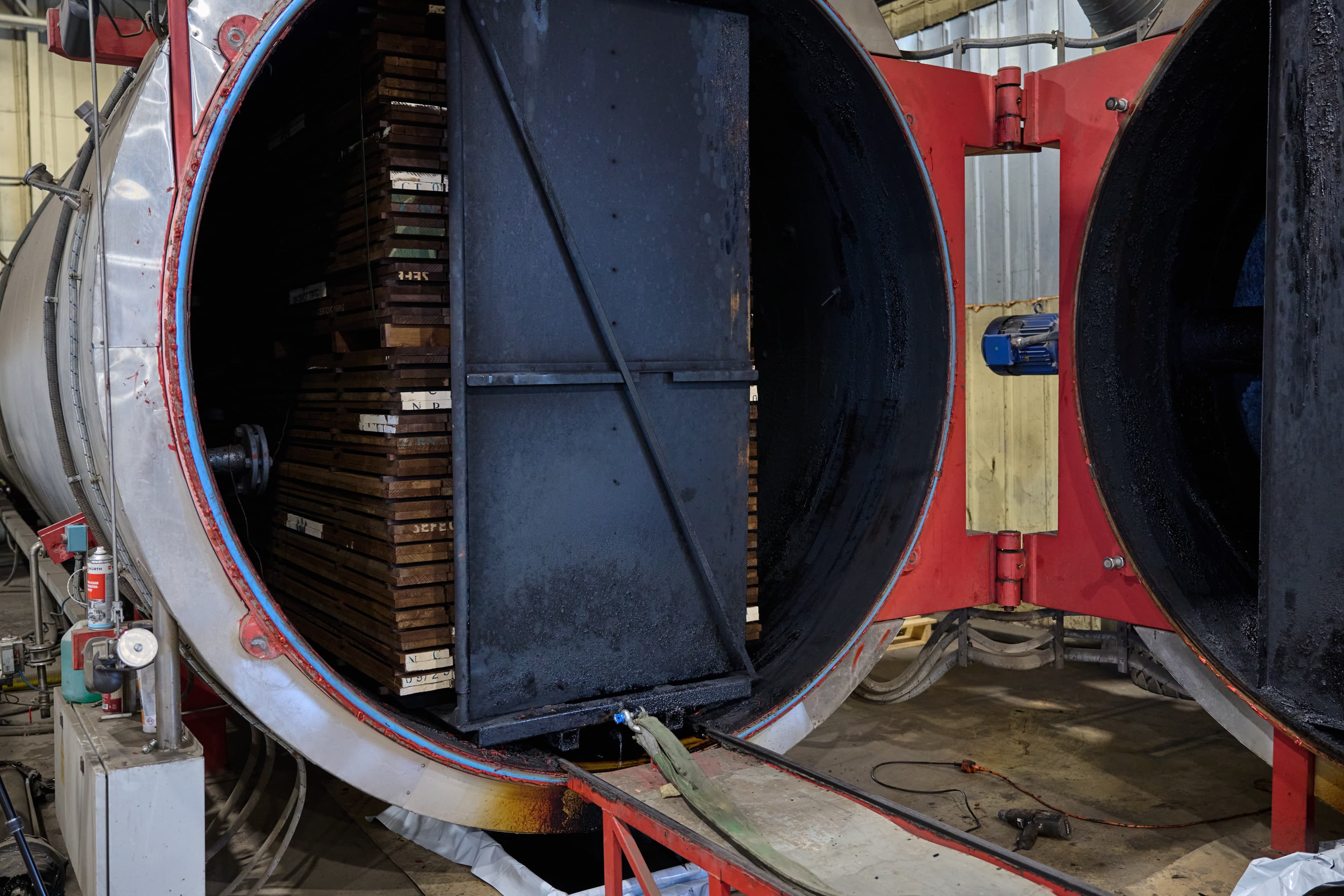
Thermal modification process at Grainel production
Thermally modified wood boards in production
Thermal treatment equipment and wood material

PROFILING

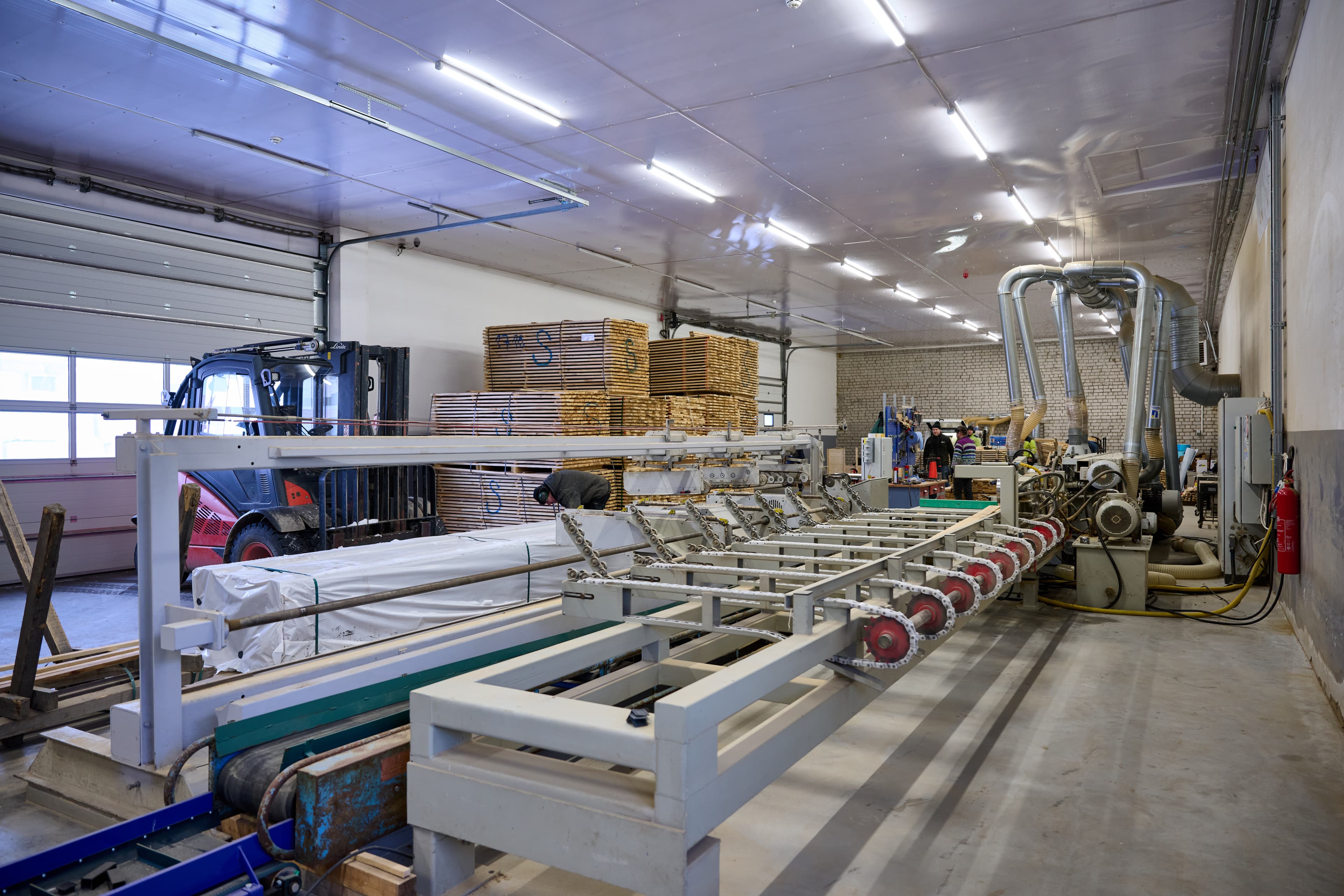
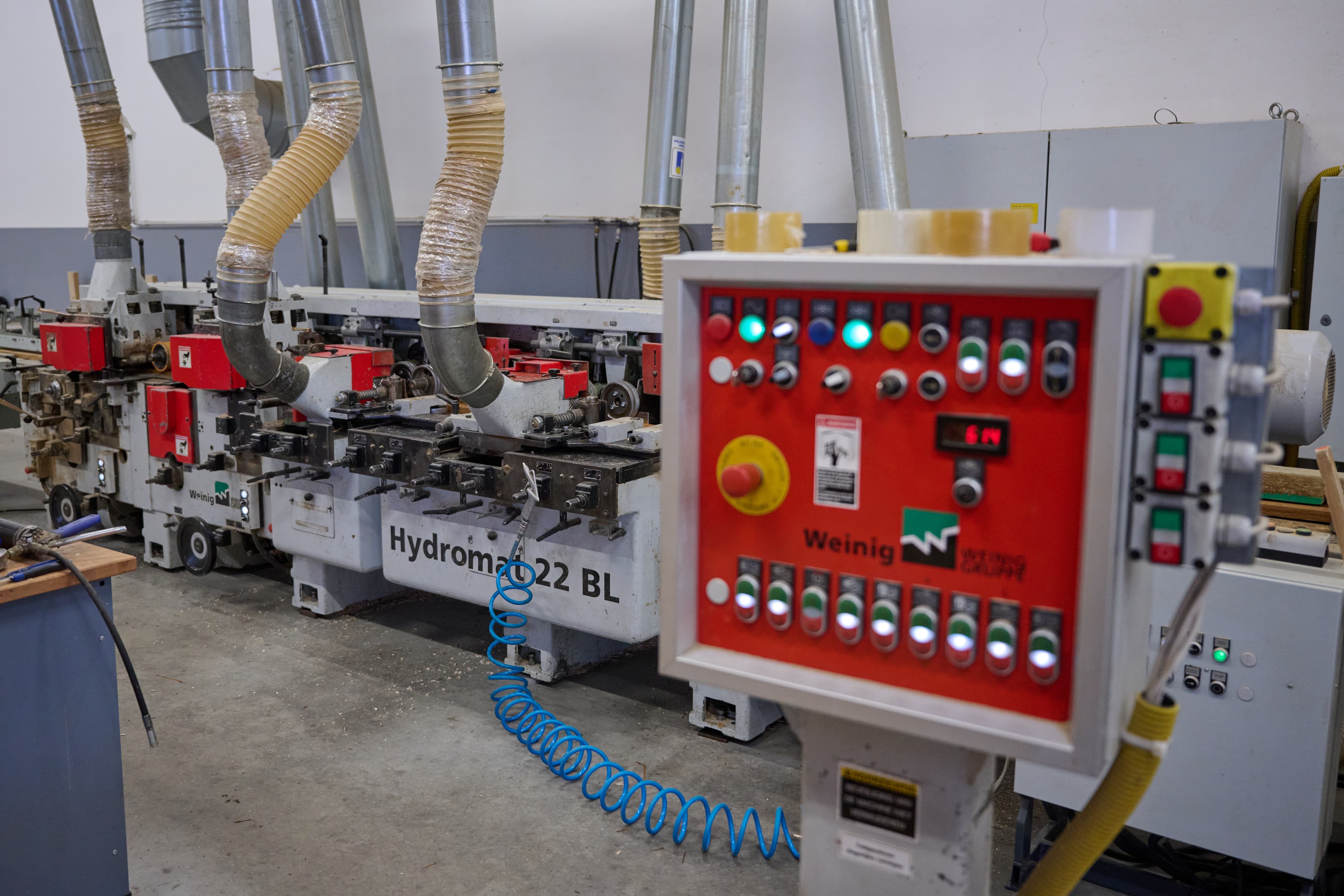
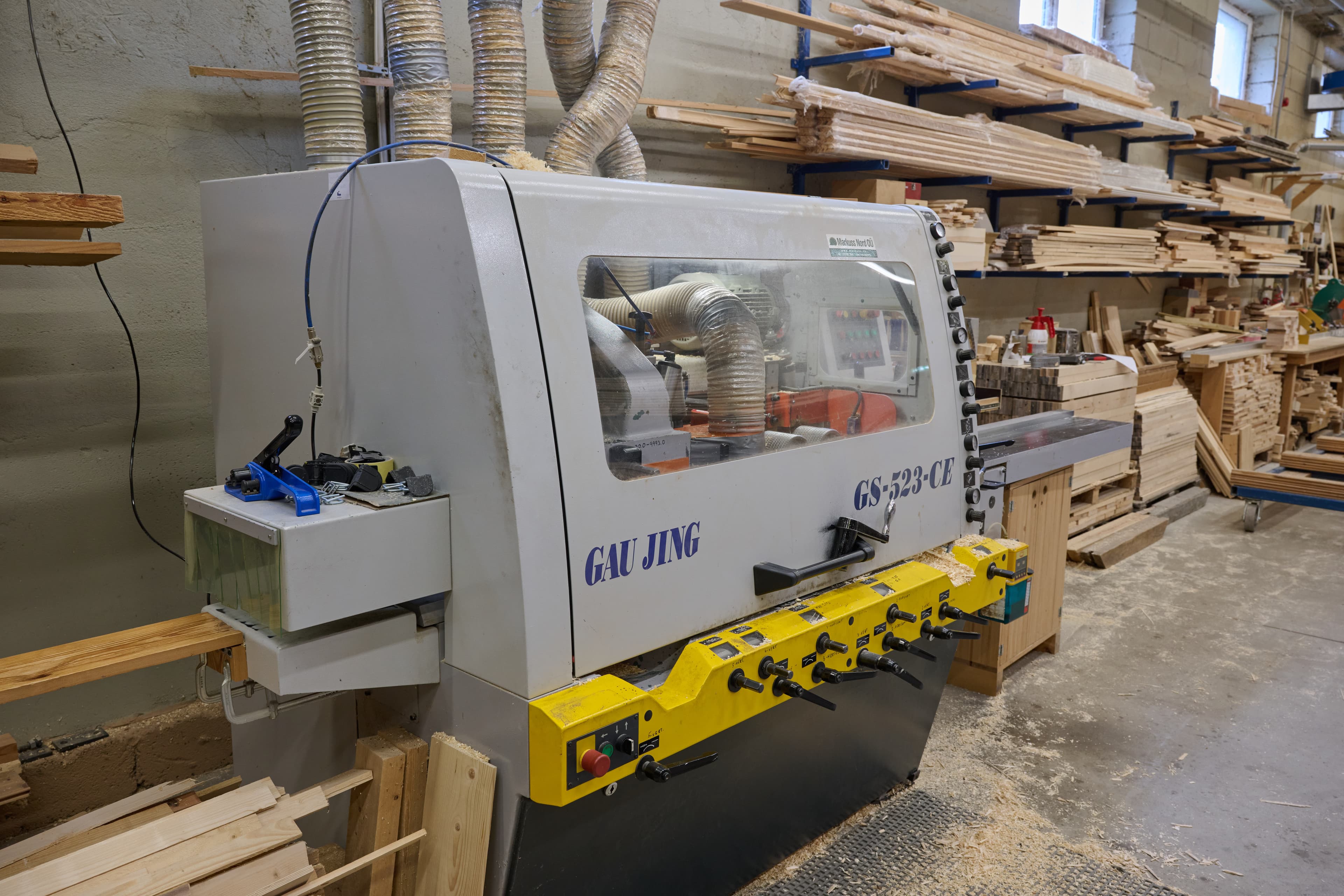
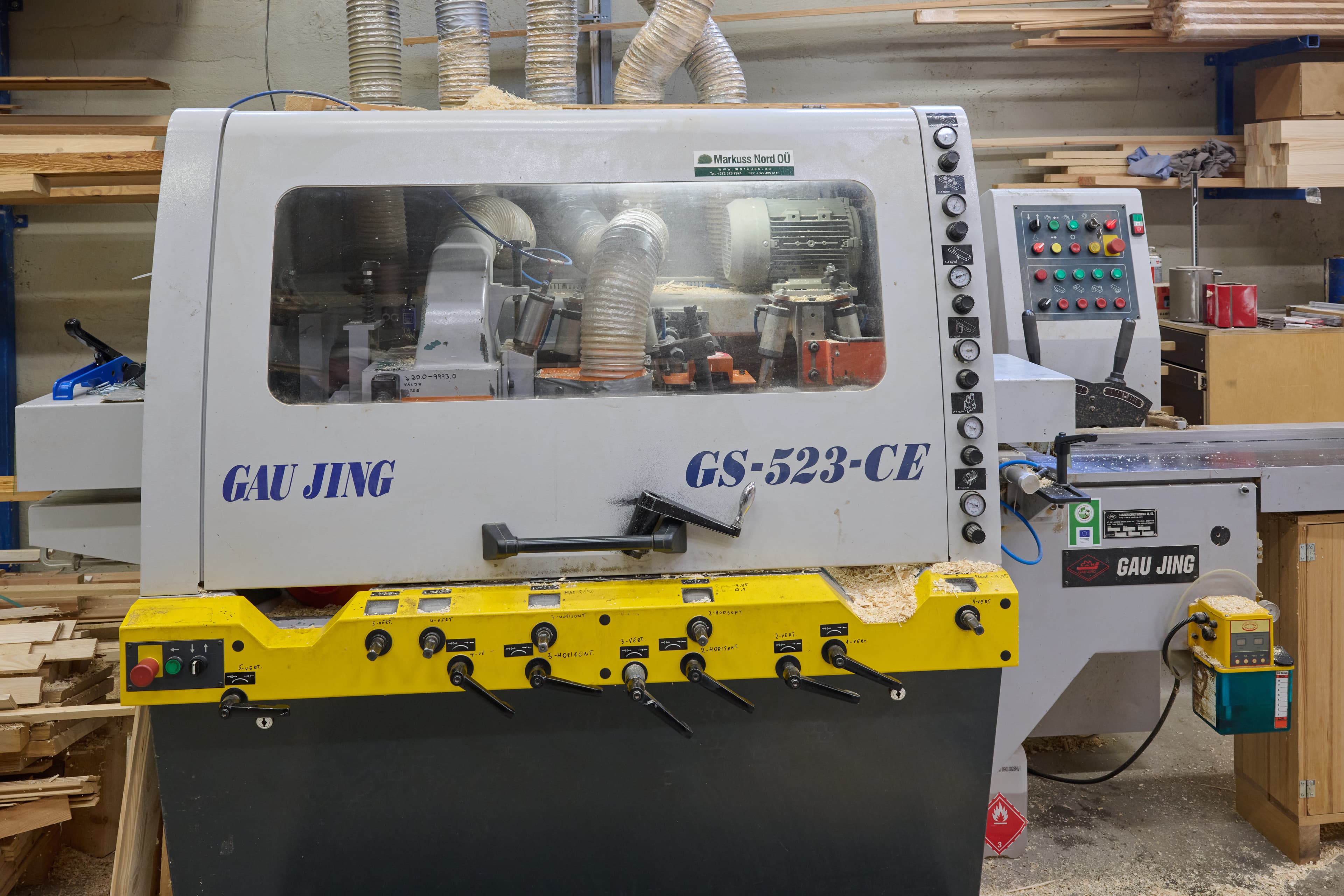
After thermal modification, the wood requires calibration in the next stage of production. The surfaces are planed and the edges are profiled as needed. See Profiles. During this process, the panels receive the tongue and groove needed for fixing and installation. At the same time, the profile is also an important design element.

Profiling machinery in Grainel production
Wood boards during the profiling stage
Profile detail created during production
Grainel profiling process and finished boards

HEWING

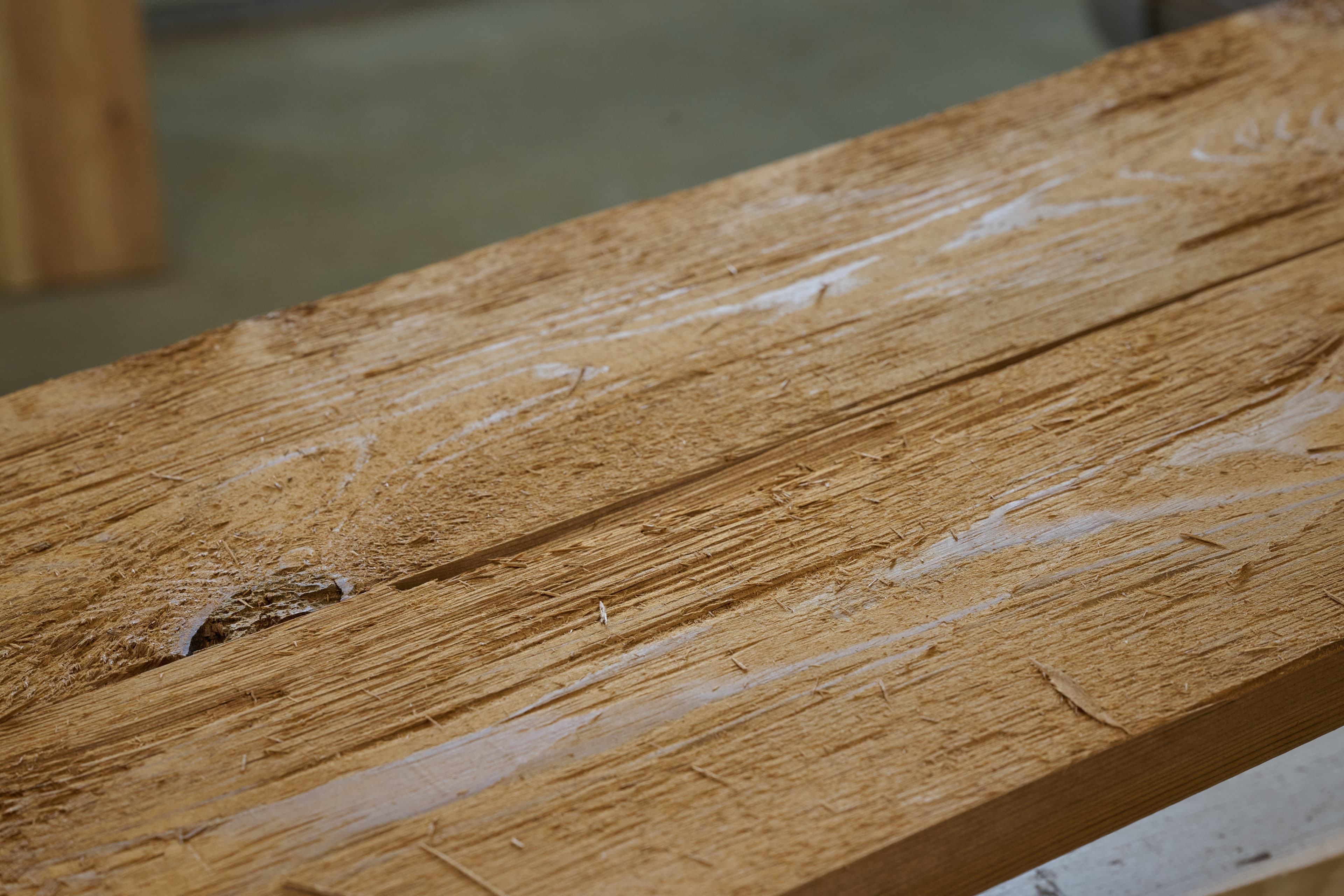
Hundreds of years ago, the axe was the main tool of our ancestors, used to shape logs into building timber. Who could have imagined that such a surface finish would still be achievable today and visually so effective?

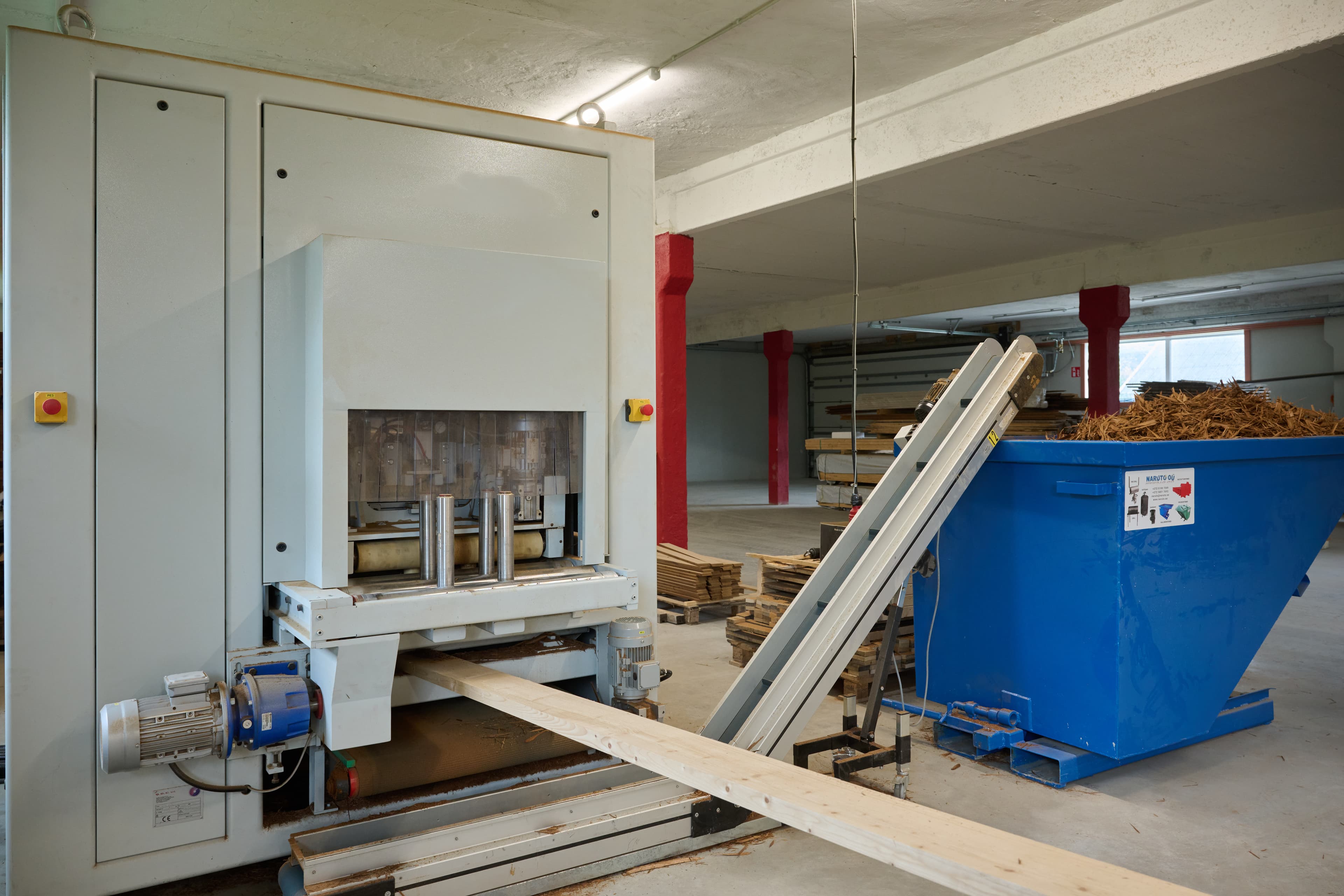
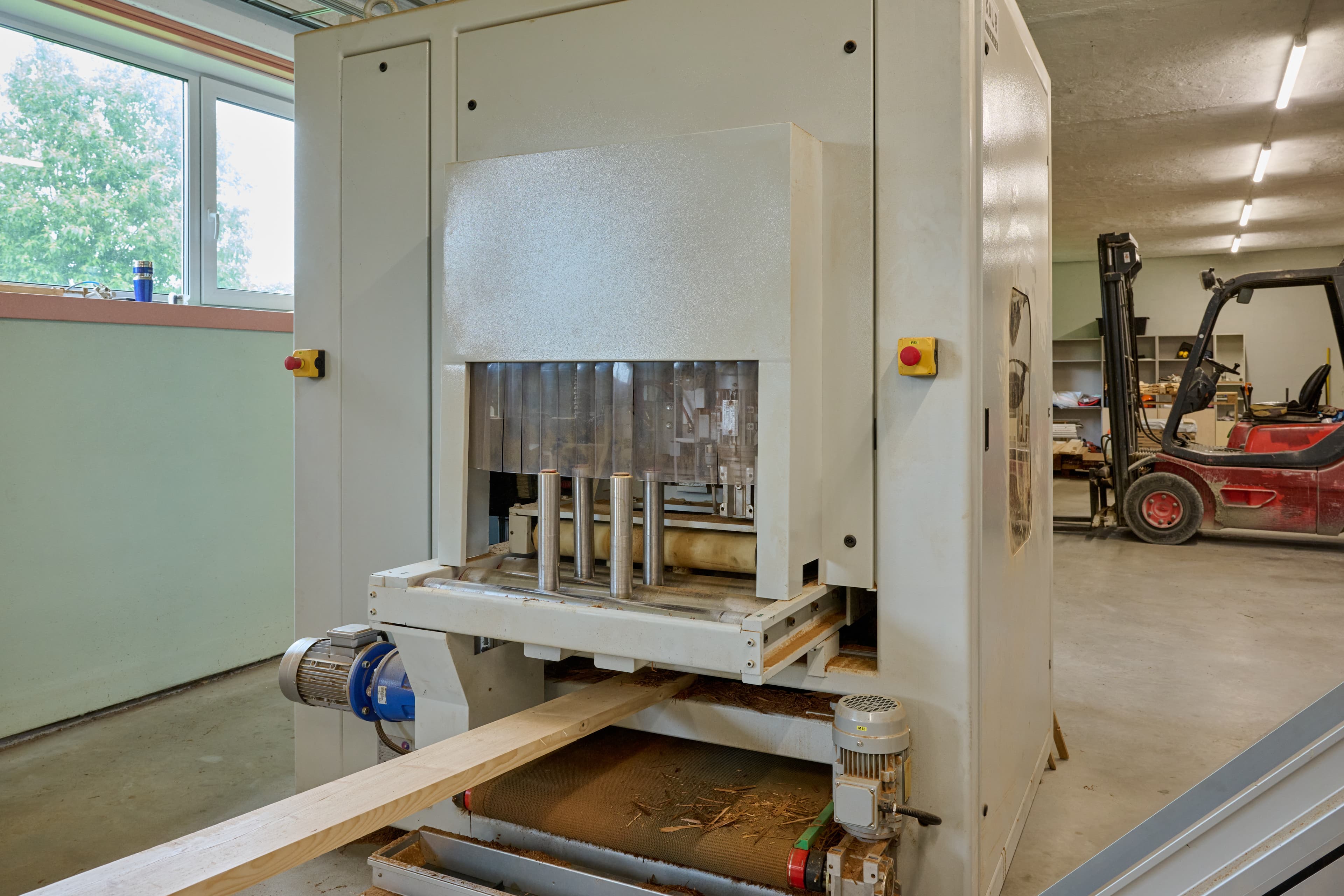
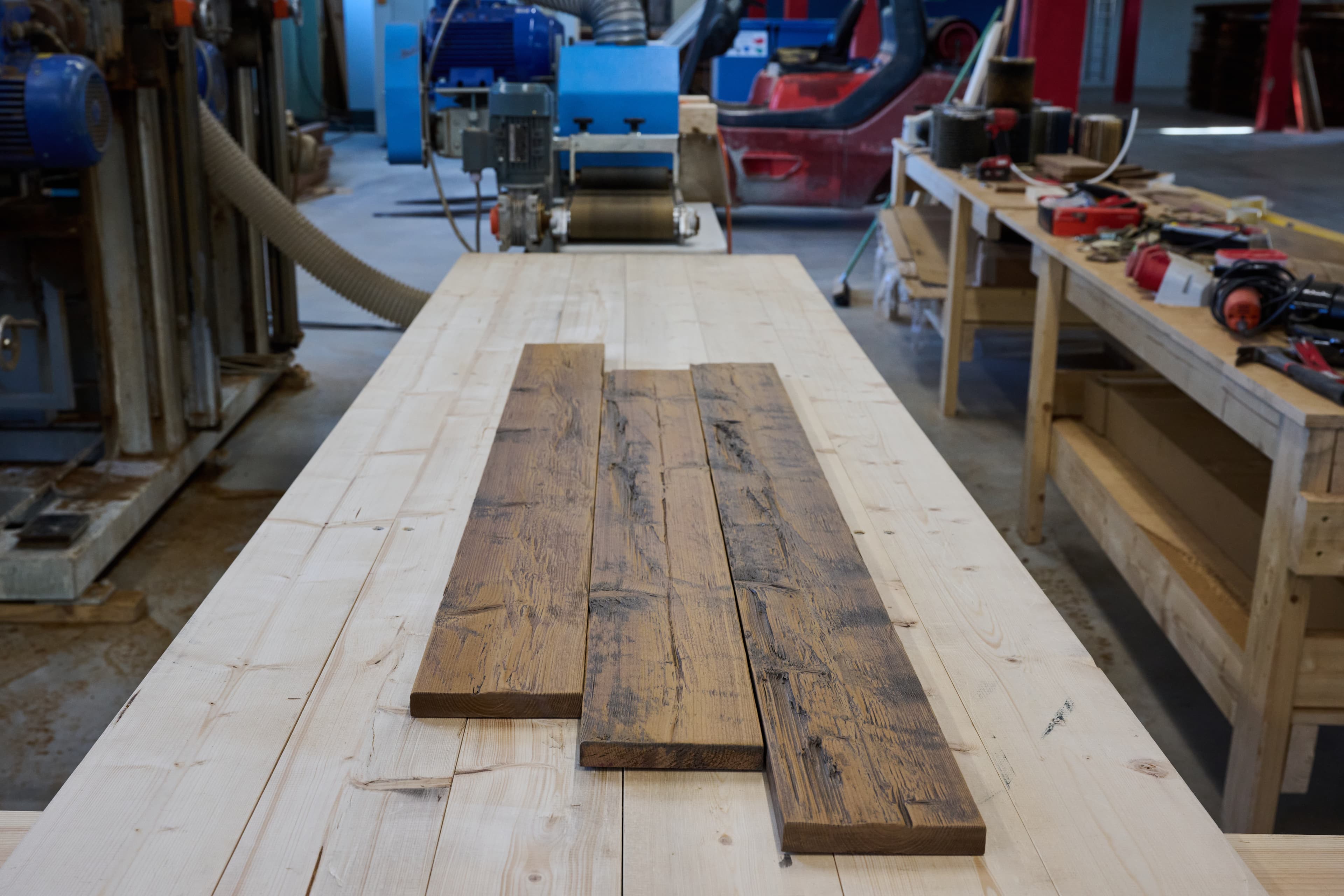
Today, special hewing machines are used for this purpose, giving the wood an authentic handcrafted appearance. A machine-hewn board is unique: no two boards repeat exactly the same pattern, which makes every surface distinctive.

All of our RUSTIC series panels are hewn to bring out the natural beauty, character, and timeless rustic appearance of the wood.

Hewing process in Grainel production
Hewn wood panel surface detail
Rustic panel hewing result in production

BRUSHING AND SANDING

Brushing is our main surface treatment method. For this we use brushes and sanding heads of different strengths and materials. The most intensive brushing takes place after calibration and profiling, and in the case of RUSTIC panels, after hewing. This treatment gives the wood surface its final structure.

Reference code markings: WWB means strong steel brushing, SWB means softer steel brushing, and SB means softer brushing with nylon brushes.

Further brushing and sanding stages are intended to improve the final finish and soften the tones.

Brushing process at Grainel production

FINISHING AND CUTTING TO LENGTH

Using the finishing machine, the panels are given the required colour tone and sheen. By means of spray nozzles, the colour is applied in a thin layer to the panel surface. The number of coats, the amount of colour, and the composition of the mixture depend on the product design.

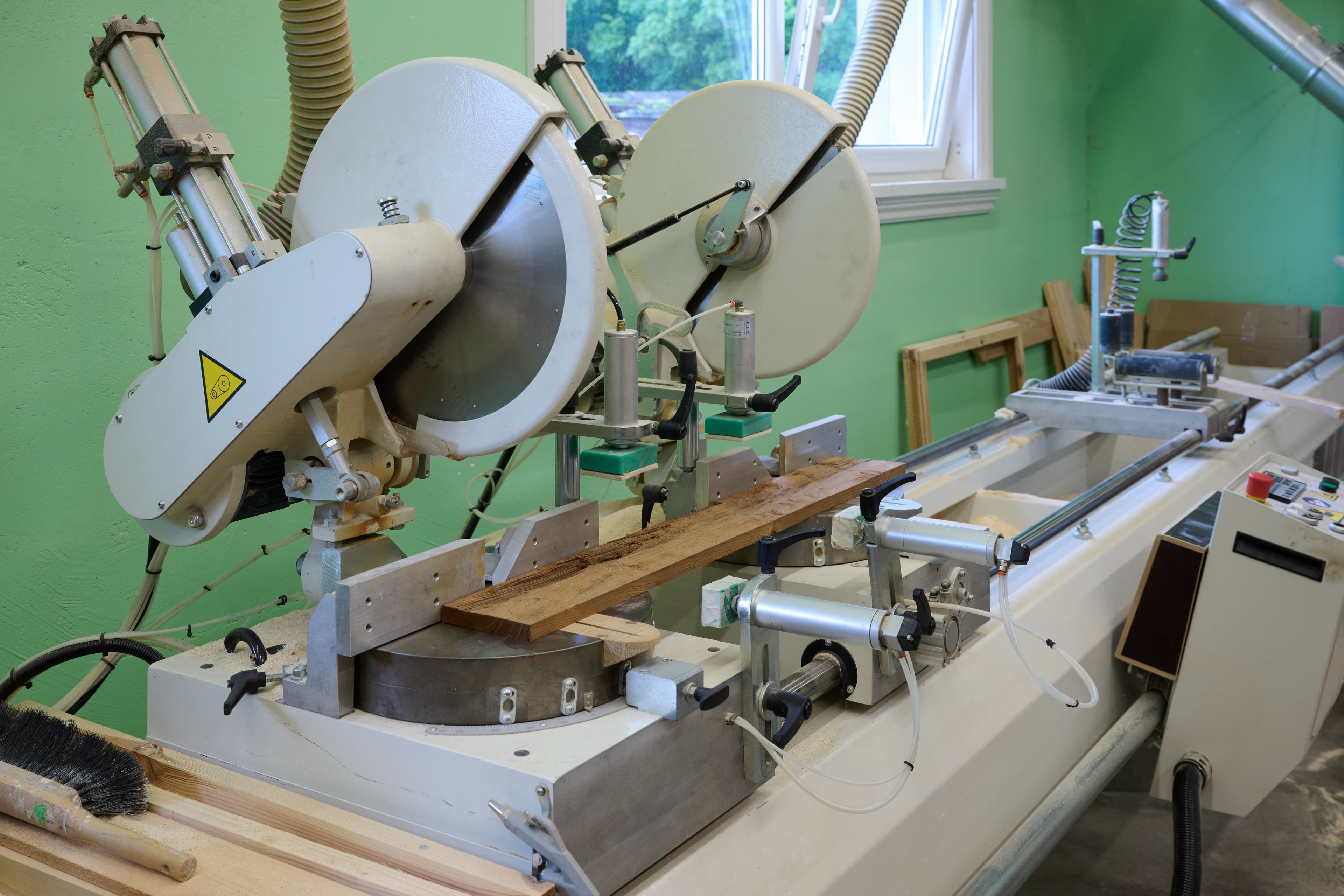
The finished panels are cut to exact length with a two-blade crosscut saw. The cut is clean and precise. When joining panels during installation, there is no need to worry.

Finished panels during cutting to length